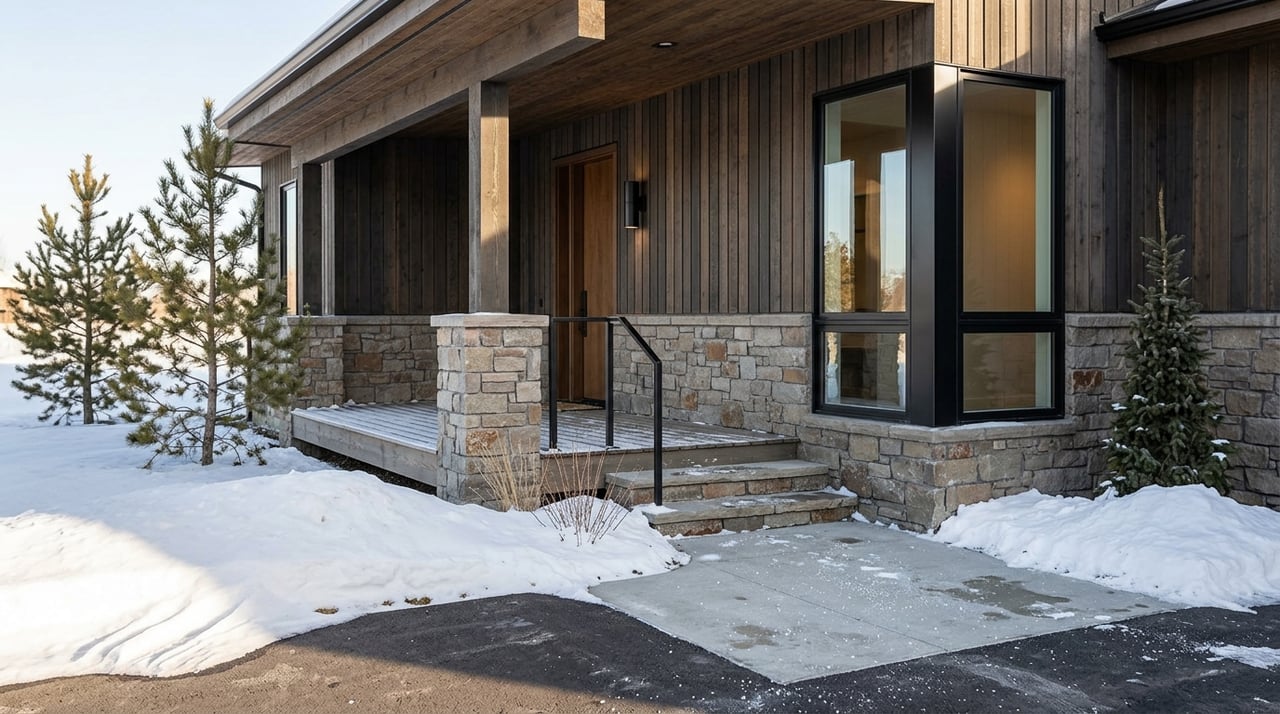
Meadow Village Condos vs Homes in Big Sky: What Fits Best?
Choosing between a condo and a home in Big Sky Meadow Village can feel simple at first, until you realize how much the details matter. You may be weighing walkability, upkeep, rental rules, taxes, or how often you plan to use the property. The good news is that Meadow Village offers both options, and each can work well depending on your goals. Here’s how to think through the decision with more clarity.
Meadow Village is one of the most service-oriented parts of Big Sky. According to Big Sky Resort, this area is one of the first major stops after the canyon and includes shops, restaurants, a medical center, grocery stores, and free public transportation.
That convenience helps explain why Meadow Village appeals to a mix of full-time residents and part-time owners. It is also important to know that the area includes both single-family homes and multiple condominium communities, all within a broader structure of covenants and association oversight.
If you picture Meadow Village as only detached homes, the local documents tell a broader story. The Big Sky Owners Association jurisdiction includes the Meadow Village subdivision and related condominium communities such as Meadowview Condos and Meadow Village Center Condos.
The Meadow Village covenants also allow for a range of property types, including condominiums, multiple dwellings, apartments, duplexes, and related support uses. In practical terms, that means your choice is not just about architecture or price. It is also about ownership structure, rules, and how you want to live in Big Sky.
With a condo in Montana, you own your individual unit and an undivided interest in the common elements. Common expenses are generally charged according to that ownership share.
That matters because a condo purchase is not just about the interior space. You are also buying into a shared building system that may include roofs, exterior walls, hallways, parking areas, and other common components maintained by the association.
Under Montana law, the association is responsible for maintenance and repair of common elements. The law also allows the association to access units when needed to protect those common elements, and unpaid common expenses can lead to a lien.
Montana law also contemplates association-managed building insurance while preserving the owner's right to insure the unit for the owner's own benefit. For you as a buyer, that makes the condo documents especially important. You want to understand exactly what the association maintains, insures, and budgets for.
A Meadow Village home usually gives you more direct control over the structure and site. That can be appealing if you value privacy, outdoor space, or the ability to make more customized decisions about how the property looks and functions.
Still, a house in Meadow Village is not free from association structure. The neighborhood covenants require design review and other use rules, and the Big Sky Owners Association applies annual assessments across condos, homes, commercial leases, and even undeveloped lots.
That means owning a home here is not the same as owning a property with no oversight. You may have more control than a condo owner over day-to-day property decisions, but you are still operating within a covenant and assessment framework.
For many buyers, this decision comes down to how hands-on you want to be. Condos often appeal to buyers who want a more lock-and-leave setup, while homes usually involve more direct responsibility.
That difference is not absolute, and every property should be verified individually. Still, the legal structure points in a clear direction: condo ownership tends to shift more exterior and common-area responsibility to the association, while homeownership usually leaves more repair, landscaping, and seasonal management in your hands.
If you spend only part of the year in Big Sky, that tradeoff can be especially important. A lower-maintenance setup may be worth more to you than extra square footage or land.
A common mistake is comparing only purchase prices. In Meadow Village, the better comparison is usually condo HOA plus BSOA assessments versus home upkeep plus BSOA assessments.
The Big Sky Owners Association says assessments help fund a broad set of services across its jurisdiction, including snow removal on more than 42 miles of roads, noxious weed spraying, sign repair, speed limits, covenant compliance, and architectural review. Since those district-level services apply across property types, the main difference often shows up in the second layer of costs.
For condos, that second layer is often association dues. Recent Meadow Village examples show how much those dues can vary. A 1-bedroom Yellowstone Condo was listed at $549,000 with HOA dues of $1,597 quarterly, while a 5-bedroom Yellowtail condo was listed at $3.575 million with HOA dues of $8,620 annually.
For homes, dues may appear lower in some cases, but that does not mean total ownership cost is lower. A golf-course home on Two Moons Road was listed at $2.25 million with a $545 annual HOA, and a Meadow Village homesite and build package was listed at $2.8 million with a $462 annual HOA. In exchange, the owner typically takes on more direct maintenance responsibility.
If rental income matters to you, Meadow Village requires a close look at the exact property. The broader area includes both second-home and vacation-use patterns, but the rules are not uniform from one building or community to the next.
The Big Sky Owners Association notes that rental and covenant rules can be community-specific. Its covenants page shows short-term rental registration requirements and fees in one neighborhood, while a separate resolution in another neighborhood prohibits short-term rentals that did not already exist before the amendment.
That is why rental potential should be treated as a property-by-property question, not a Meadow Village-wide assumption. Before you buy, confirm whether short-term rentals are allowed and whether there are registration, occupancy, parking, or other operational rules.
In Montana, how you plan to use the property can affect your budget in a meaningful way. For tax year 2026, primary residences and qualifying long-term rentals may receive reduced tiered rates, while second homes and short-term rentals are taxed at the flat 1.90% residential rate.
That makes your intended use more than a lifestyle question. It is also a financial planning question that should be part of your decision from the beginning.
This matters in Big Sky because the market is strongly influenced by second-home ownership and vacation use. A recent Big Sky governance study found that residential properties dominate the tax base, and in a 3,000-parcel sample, owner-occupied homes averaged about $2.1 million in market value versus about $6 million for second or vacation homes.
Another reason to avoid assumptions is that not every condo in the Meadow area is designed for the same buyer. Big Sky Community Housing Trust's MeadowView units, for example, are intended for year-round local workers.
Those units require primary residency, prohibit short-term rentals, and restrict ownership to buyers who do not own other housing. That is a very different use model from a vacation-oriented condo, even though both may be located in the broader Meadow area.
When you compare condos and homes in Meadow Village, a few questions can quickly sharpen the picture:
The answers often matter more than whether the listing says condo or single-family. In Meadow Village, ownership structure and use restrictions can shape your real experience just as much as location or layout.
A condo may be the better fit if you want easier ownership, shared exterior maintenance, and a more lock-and-leave lifestyle close to Meadow Village services. It can also make sense if you are comfortable with association governance and want a property that may require less day-to-day coordination.
A single-family home may fit better if you want more privacy, more control over the structure and site, and a property that feels more independent. Just remember that independent does not mean rule-free in Meadow Village, and it usually comes with more direct upkeep.
The right answer is rarely one-size-fits-all. In Big Sky, the better choice usually comes from matching the property to how you plan to use it, what level of maintenance you want, and how the fee and tax structure fits your budget.
If you want help comparing specific Meadow Village condos or homes, Ben Coleman offers clear, local guidance shaped by years of experience helping buyers make sense of Big Sky’s neighborhood differences.
Stay up to date on the latest real estate trends.


Ben's knowledge of the Big Sky market and relationships built over time with the real estate community helps in every step of the process. Contact him today to discuss all your real estate needs!