Moonlight Basin Land and Builds for Custom Buyers
If you are dreaming about a custom home in Moonlight Basin, it helps to know that buying land here is not the same as buying a simple build-ready lot in a typical subdivision. This is a landscape-led community in the greater Big Sky area, and that comes with real upside and real complexity. When you understand the approval process, design expectations, utility questions, and mountain construction realities early, you can make better decisions and avoid costly surprises. Let’s dive in.
Moonlight Basin is publicly described as an 8,000-acre landscape, while Madison County planning documents place the area at about 8,700 acres. In practical terms, the exact acreage matters less than the overall character: this is a large-scale mountain environment shaped around open space, wildlife corridors, and homes designed to sit lightly on the land.
That setting is a big part of the appeal if you want something more personal than a resale home. Public-facing property materials show a mix of current and future neighborhoods, including Lodge Neighborhood, Lee’s Poole, Ulery’s Lake Camp, Madison Village, Moonlight Golf, and South Jack. The community also markets a range of ownership options, from cabins and homes to acreage where you may be able to build.
Yes, you can buy land and build in Moonlight Basin, but you should not assume every parcel is equally ready for construction. Before you move forward, you will want to confirm plat status, subdivision approvals, covenants, utility availability, and any community-level review that applies to the specific lot.
Madison County’s subdivision process makes that especially important. The county states that lots cannot be sold until final plat approval is granted and the plat is recorded. That means part of your due diligence is making sure the parcel is not just attractive on paper, but actually in the right stage for the type of project you have in mind.
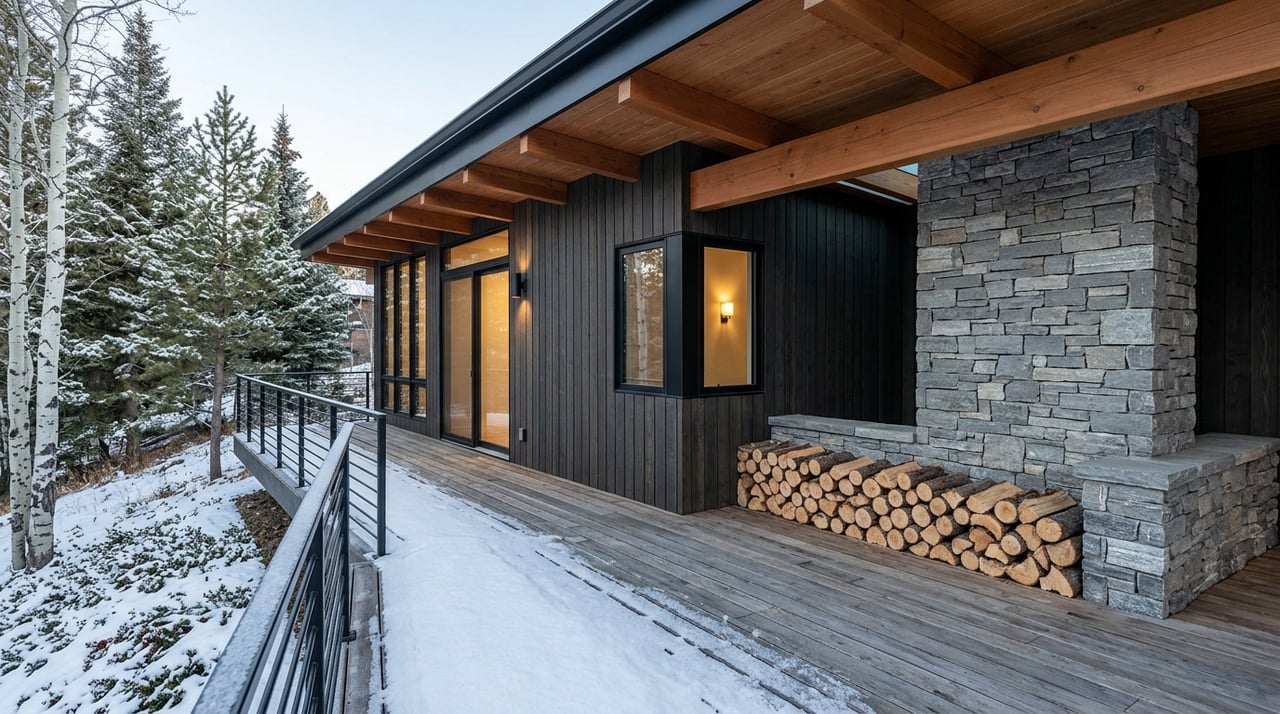
In Moonlight Basin, the public design message is clear: architecture should respond to the landscape rather than dominate it. Community materials emphasize mountain views, natural materials, and homes that visually blend into the terrain.
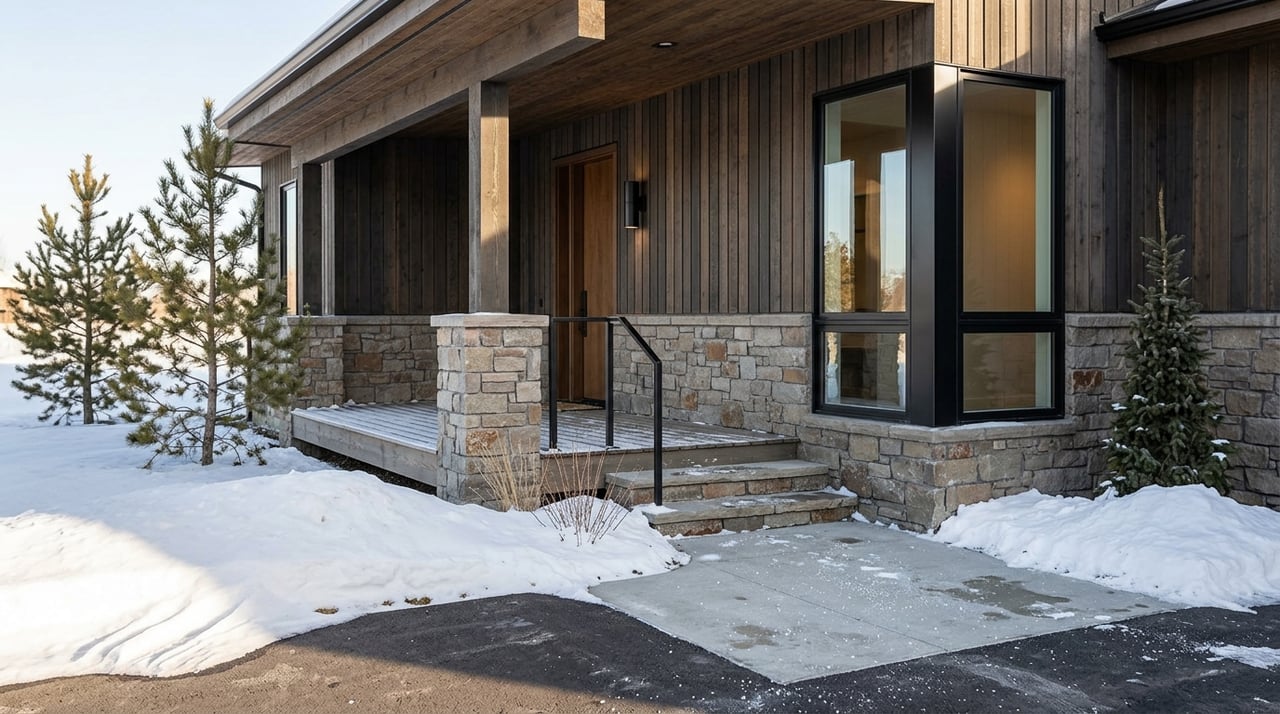
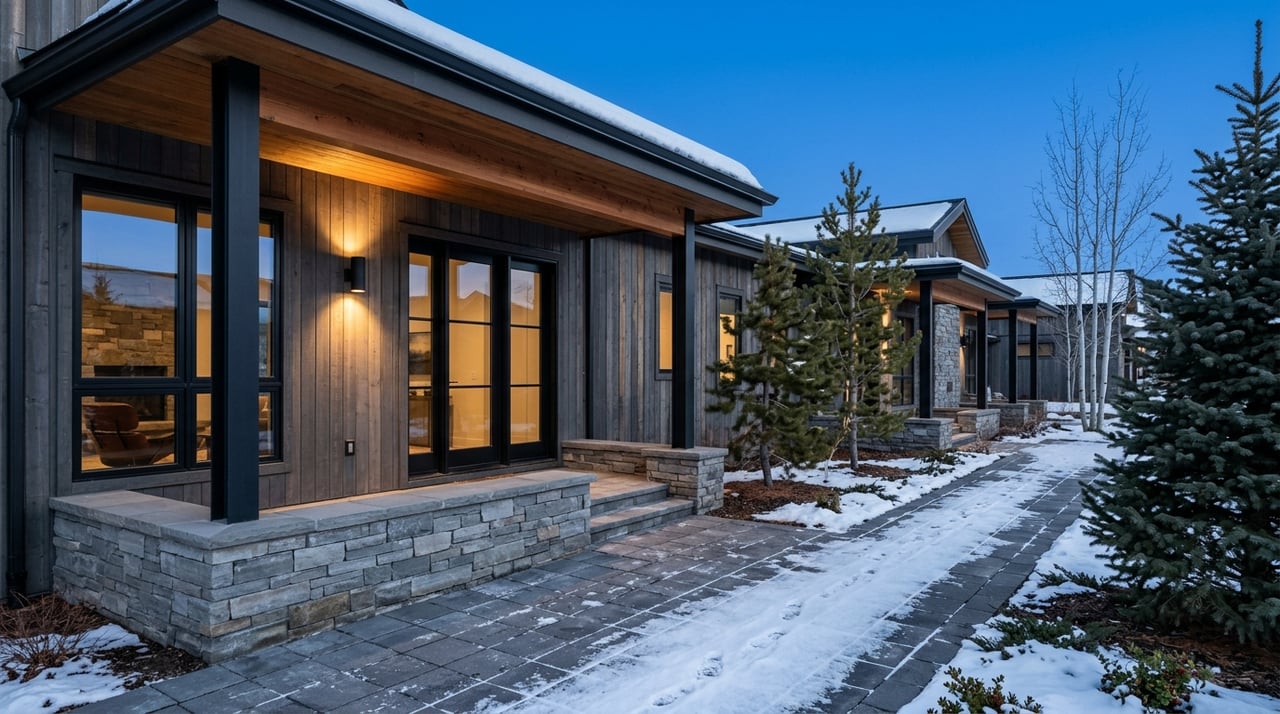
For most buyers, that points toward a mountain-contemporary style. Think lower-profile massing, durable exterior materials, generous glazing, and siting that protects views while reducing visual impact. Public examples tied to the broader community also highlight fireplaces, local materials, and strong indoor-outdoor connections.
This does not mean every home looks the same. It does mean your design team should be ready to work within a context where the site itself drives many of the architectural decisions.
A Moonlight Basin land purchase often involves more moving parts than buyers expect. Recent county approval documents tied to Moonlight Basin projects reference geotechnical reporting, road and utility easements, wildfire response planning, bear-specific construction practices, no-build zones near waterways, revegetation, and county review of final plats and improvements.
That does not mean every lot will trigger every issue. It does mean you should treat each parcel as its own due diligence project. In this part of Madison County, land value and build potential are closely tied to the underlying approvals and physical site conditions.
In high-end mountain communities, utility timing can shape the whole build schedule. Recent county staff reports for Moonlight Basin West 1 show reliance on expansion of the Moonlight Basin Water & Sewer public system, along with review of water supply, wastewater, road, and stormwater infrastructure through both the county and the Montana Department of Environmental Quality.
Those same reports reference 33 hydrants, multiple lift stations, and remaining system capacity projections after the project. For you as a buyer, the takeaway is simple: utility planning is not background noise. It can affect lot delivery, building timelines, and overall confidence in when a project can move from purchase to construction.
Madison County also requires permits for septic systems or wastewater treatment systems, with different documentation depending on parcel size and approval status. Separate county pages note that a construction or demolition permit may be required, and an encroachment permit is required when work happens in a county road right-of-way.
If you are building in Moonlight Basin, patience is part of the plan. Madison County says preliminary plat review typically takes about 5 to 6 months, followed by a final plat process that can take up to 3 calendar years after preliminary approval, with a possible 1-year extension.
Even after the land side is ready, mountain construction adds its own schedule realities. NOAA climate normals for the Big Sky area reflect a high-elevation setting with cold winters, cool shoulder seasons, and weather that can affect excavation, concrete work, exterior finishes, and landscaping. In practice, that means many custom builds need more than one construction season, plus buffer time.
A good rule of thumb is to build your timeline backward from when you want to use the home, not forward from contract signing. That gives you more room for weather, approvals, and infrastructure timing.
The county’s own guidance is a strong reminder that a custom build team should be assembled early. Madison County states that a licensed surveyor is required, and depending on the project, buyers may also need hydrologists, site planners, architects, engineers, wildlife experts, wetlands specialists, geotechnical engineers, traffic engineers, and cultural-resources specialists.
For a Moonlight Basin build, the practical core team often starts with:
Moonlight Basin has publicly highlighted architects involved in major community projects, including Olson Kundig and Reid Smith Architects, along with other Bozeman-area design talent. The larger point is not that you need any one specific firm. It is that local and regional experience matters in a place where siting, snow load, access, and finish durability all affect the outcome.
Moonlight Basin sits in a landscape where environmental review is not unusual. The community’s own land messaging places the property within the Greater Yellowstone Ecosystem and emphasizes migration habitat, while county staff reports reference wildlife monitoring, bear-safe practices, and no-build zones near waterways.
Madison County also treats the area as wildland-urban interface country. Its ignition-resistant construction guidance points toward Class A roofing, ignition-resistant siding, screened vents, and defensible-space planning.
For you, this means wildfire mitigation should be part of the first design meeting, not a late-stage checklist item. It also means site planning should consider how the home functions within the broader landscape, not just how it looks from the driveway.
One of the most common assumptions buyers make in resort communities is that ownership automatically includes the same access for every property. Public Moonlight Basin materials suggest a more layered structure.
The community’s membership information lists Signature, Sports, and National categories, and homeowner-services materials separately address assessments and water or sewer questions. If amenity access matters to you, verify exactly what transfers with title, what requires separate membership, and what costs or approvals may apply.
That step is especially important if you are comparing different neighborhoods or lot types. Two properties in the same broad community can offer very different ownership experiences.
Before you commit to land, it helps to work through a practical checklist. The right parcel is not just the one with the best views. It is the one that aligns with your budget, design goals, timeline, and comfort level with approvals.
Here are key questions to ask:
This is where local guidance can save you time. In a market like Moonlight Basin, the difference between a smooth project and a frustrating one often comes down to asking the right questions before you buy.
Buying land for a custom home in Moonlight Basin can be rewarding, but it works best when you approach it with a clear plan and local context. You are not just choosing a homesite. You are choosing a process that involves county approvals, infrastructure timing, architectural fit, and seasonal construction realities.
That is why buyers benefit from low-pressure, place-based advice early in the search. With deep Big Sky experience, a clear understanding of Moonlight Basin’s submarkets, and a practical eye for both lifestyle fit and build feasibility, the right advisor can help you narrow the field before you commit capital to the wrong parcel.
If you are considering land or a custom home opportunity in Moonlight Basin, Ben Coleman can help you evaluate the options with local insight and a straightforward plan.
Stay up to date on the latest real estate trends.


Ben's knowledge of the Big Sky market and relationships built over time with the real estate community helps in every step of the process. Contact him today to discuss all your real estate needs!