How to Choose Between Cabins and Homes in Gallatin Canyon
If you are trying to decide between a cabin and a home in Gallatin Canyon, the answer usually has less to do with the label and more to do with how you plan to live. In the 59730 area, buyers often picture a simple mountain getaway on one side and a full-time residence on the other, but the real differences come down to access, utilities, layout, and day-to-day comfort. If you want to make a smart choice in this stretch between Bozeman, Big Sky, and West Yellowstone, it helps to understand how the canyon actually functions. Let’s dive in.
Gallatin Canyon follows the US-191 corridor along the Gallatin River, linking the Bozeman and Gallatin Gateway side to Big Sky and West Yellowstone. According to the Montana Department of Transportation, this corridor includes about 15 small residential subdivisions, many individual homesites, and three commercial service clusters.
That mix matters when you compare cabins and homes. You are not just choosing a style of property. You are choosing a parcel, an access pattern, a utility setup, and a level of convenience that can vary a lot from one location to the next.
Big Sky is about 50 miles south of Bozeman and 51 miles north of West Yellowstone. Local visitor information describes the area in three parts: the mountain, the meadow, and the canyon. The Meadow is the main service area, with shopping, restaurants, Big Sky Medical Center, and three grocery stores, while the Canyon is the first section you reach on Highway 191 and has more limited cell service.
In Gallatin Canyon, "cabin" and "home" are not always rigid categories. The county’s zoning framework and the corridor’s mix of rural subdivisions, resort-adjacent areas, and individual homesites mean the practical differences often matter more than the listing language.
A smaller cabin may feel ideal for weekend escapes, while a traditional single-family home may support longer stays or year-round living more comfortably. A larger retreat-style property may offer more privacy, more land, and more room for guests, but it can also bring more site work and more ownership complexity.
That is why it helps to think in terms of fit instead of labels. The right property is the one that matches how often you will use it, how much maintenance you want to manage, and how important proximity to services is for your routine.
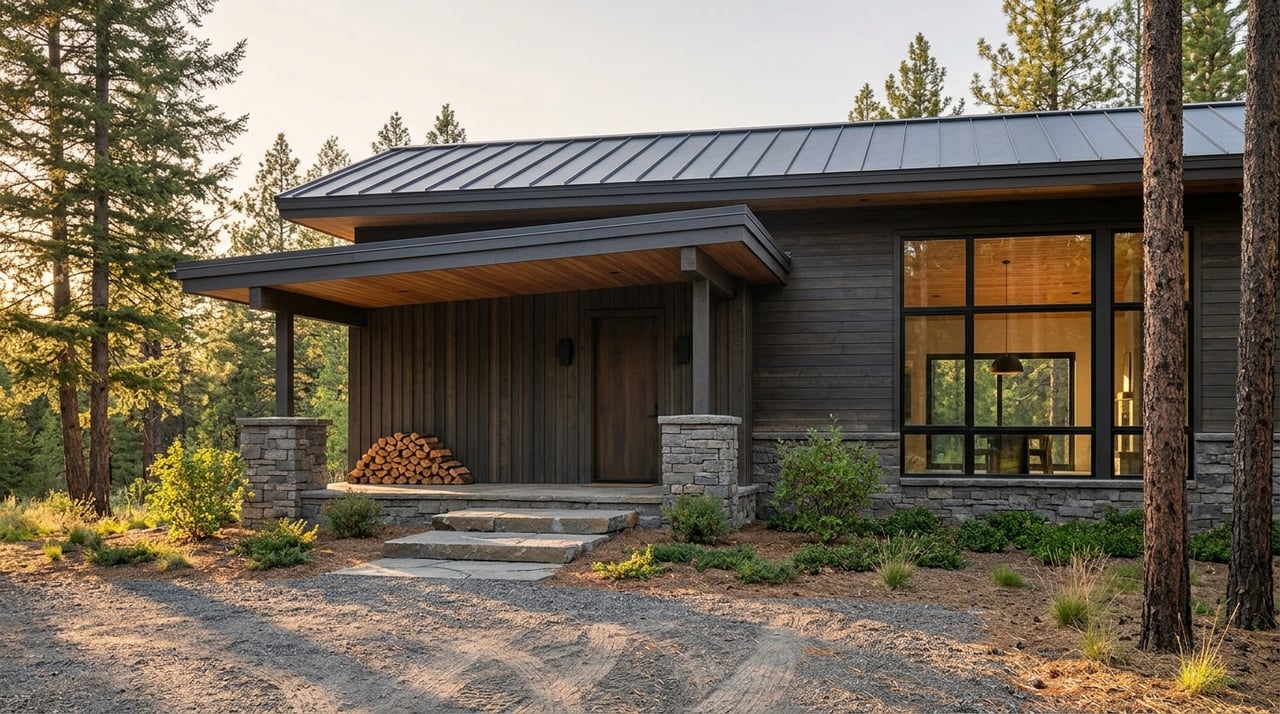
Cabins in Gallatin Canyon often appeal to buyers who want a smaller footprint and a more recreational feel. They can be a good fit if you see the property as a place to unplug, spend time outdoors, and keep things relatively simple.
For many second-home buyers, that kind of setup feels right for seasonal or part-time use. In a corridor known for hiking, fishing, scenic drives, and quick access to outdoor recreation, a cabin often supports the lifestyle people come here for in the first place.
If you do not need a highly conventional floor plan, a cabin may offer an easier way to enjoy the area without buying more house than you need. Buyers who value simplicity over extra storage, multiple living spaces, or a more formal layout often lean this direction.
That said, “simple” does not always mean effortless. In Gallatin Canyon, private systems, winter weather, and parcel-specific access can still shape the ownership experience in a big way.
Traditional single-family homes are often the clearest fit for buyers who want to live in the area full-time or return frequently throughout the year. They usually offer more separation between bedrooms and common areas, along with more storage for winter gear, outdoor equipment, and everyday household needs.
That extra function matters in a mountain setting. If you work remotely, host guests often, or want a more predictable everyday routine, a home may feel more comfortable over time than a smaller cabin.
The Meadow area of Big Sky concentrates many of the everyday services buyers look for, including groceries, restaurants, shopping, and medical care. If being closer to those resources matters to you, a traditional home may align better with your needs than a more remote canyon property.
For buyers who want dependable comfort in winter and easier access to daily errands, a home often provides a stronger long-term fit. It can still offer the mountain setting you want, but with a more conventional living experience.
At the upper end of the market, larger retreat-style properties usually combine more square footage, more land or privacy, and more extensive site work. In Gallatin Canyon and the broader Big Sky area, these properties often appeal to buyers who prioritize quiet, views, and room to spread out.
They can make sense for multi-generational use, frequent entertaining, or households that want extra guest space and room for gear. In this part of Montana, the land and setting are often just as important as the house itself.
With retreat-style properties, cost is not driven by square footage alone. Parcel access, utility setup, privacy, and the amount of site work required can all shape value and long-term ownership costs.
That is one reason local guidance matters. Two properties that sound similar on paper can live very differently once you account for driveway conditions, systems, and distance from services.
One of the biggest practical differences in Gallatin Canyon is utility service. The Gallatin Canyon County Water & Sewer District notes that service in the canyon currently includes private wells and many septic systems, along with some larger public wastewater systems that serve specific development areas.
The district is also proposing nearly five miles of sewer collection main along Highway 191 and through the Canyon Area corridor, and some properties may still need to petition for annexation. That means two nearby properties may have very different utility responsibilities and future considerations.
For buyers, this often comes down to lifestyle and comfort with maintenance. A cabin on private systems may offer a lower-complexity entry point in some cases, while a district-served home may come with steadier monthly utility costs and fewer septic-related tasks.
In Gallatin Gateway, for example, the local water and sewer district posts a sewer rate of $72.76 per VRU per month, plus a $6 per lot per month benefitted-lot charge. While not every Gallatin Canyon property falls under that structure, it is a good reminder that utility costs here are local and highly specific.
The Big Sky 2WNW NOAA station, at 6,590 feet, shows a clear winter-oriented climate. The 1991-2020 normals list January average temperatures of 29.8°F for highs and 8.5°F for lows, while July averages are 77.6°F and 41.3°F. Annual precipitation is 23.31 inches, and heating needs far outweigh cooling needs.
That makes winter readiness a core part of any buying decision. Whether you are considering a cabin or a home, heating systems, insulation, snow management, and seasonal upkeep should be part of your planning from day one.
The corridor is the main route connecting the Bozeman and Belgrade area to Big Sky and West Yellowstone. MDT also notes ongoing safety and wildlife-crossing work near the mouth of Gallatin Canyon and north of Big Sky.
For you as a buyer, that reinforces a simple truth: this is a mountain corridor. Road conditions, driveway maintenance, and wildlife encounters are part of normal ownership, not unusual surprises.
A cabin is usually the better match if you want a recreational base, plan to use the property part-time, and are comfortable with a more self-sufficient setup. It can be a strong choice if your main goal is to spend time in the canyon, enjoy the landscape, and keep your footprint modest.
This option often appeals to buyers who value experience over extra square footage. If your ideal mountain property is more about access to the outdoors than everyday convenience, a cabin may feel just right.
A traditional home often makes more sense if you expect to live there full-time, visit often, or want more dependable comfort through all seasons. It is usually the better fit when storage, layout, and proximity to services play a bigger role in your decision.
For many buyers, the answer comes down to how much structure they want around daily life. The more your property needs to function like a primary residence, the more a home tends to stand out.
A larger retreat is often the best fit if privacy, guest capacity, and gathering space top your list. In this market, those properties can be especially compelling for buyers who want a more substantial mountain base with flexibility for family and visitors.
Just keep in mind that the total ownership picture may be shaped as much by the parcel as by the structure. In Gallatin Canyon, the land, utilities, and access can matter every bit as much as the home itself.
Before you move forward on a cabin or home in Gallatin Canyon, it helps to verify a few property-specific details:
These answers can shape your ownership experience as much as square footage, finishes, or views. In a market like this, informed buying usually means looking beyond the photos and understanding how the property works on the ground.
If you are weighing cabins, homes, or larger retreat properties in Gallatin Canyon, local context can make the decision much clearer. With deep experience in Big Sky and the surrounding canyon market, Ben Coleman can help you compare options, understand parcel-specific tradeoffs, and move forward with confidence.
Stay up to date on the latest real estate trends.


Ben's knowledge of the Big Sky market and relationships built over time with the real estate community helps in every step of the process. Contact him today to discuss all your real estate needs!