Big Sky Mountain Village Ski Neighborhoods Comparison Guide
Choosing the right ski neighborhood in Big Sky’s Mountain Village can shape your entire experience, from how quickly you reach the lift to how quiet your evenings feel after après. If you are comparing condos, cabins, or resort-style ownership options here, it helps to look past the broad “Mountain Village” label and focus on how each pocket actually lives day to day. This guide breaks down the main ski neighborhoods, their access, feel, and ownership considerations so you can narrow in on the right fit with more confidence. Let’s dive in.
Mountain Village is the central base area at Big Sky Resort, with dining, shopping, gear rental, lift ticket services, and access to several major lifts. According to Big Sky Resort’s base areas guide, recent lift improvements have strengthened connectivity across the village, including Swift Current 6, Ramcharger 8, and the Explorer Gondola linking Mountain Village to Lone Peak year-round.
That matters when you compare neighborhoods. A location that may have felt less convenient on an older map can function differently today, so it is smart to use the current trail, village, and street maps when evaluating ski access and walkability.
For many buyers, the core village cluster delivers the most seamless ski experience in Mountain Village. This group includes Summit Hotel, Village Center, Huntley Lodge, Shoshone, and Snowcrest.
This is the strongest ski-in, ski-out pocket in Mountain Village. The Summit Hotel sits slopeside to Ramcharger and Swift Current, Village Center offers direct slope access, Huntley and Shoshone are also slopeside, and Snowcrest sits just steps from the plaza.
If you want to walk to lifts, dining, and village services without relying much on a car, this area should be at the top of your list. It is the most “base area” experience in the resort.
The tradeoff for that convenience is energy and activity. With The Exchange redevelopment and plaza updates, this is now the main dining and retail hub, with places like Vista Hall, Westward Social, and the Umbrella Bar drawing steady pedestrian traffic.
In practical terms, this is likely the busiest and loudest part of Mountain Village. If you enjoy being in the middle of the action, that can be a plus. If you prefer a quieter, tucked-away setting, it may feel a bit too active during peak ski periods.
The core cluster spans a wide range of vintages. Big Sky Resort’s historic timeline shows Huntley Lodge dating to the 1973 opening season, Shoshone opening in 1990, Snowcrest in 1997, Summit for the 2000 winter season, and Village Center ski suites in 2007.
That mix matters because two units in the same area can offer very different finishes, systems, and renovation histories. Huntley and Summit were renovated in 2021, which helps explain why parts of the core can feel more refreshed than their original build dates suggest.
These buildings are also the most hotel-like ownership options in Mountain Village. Big Sky Resort notes that Huntley, Shoshone, Summit, and Village Center have on-property front desks, and resort amenities can include ski valet, housekeeping, concierge, pools, hot tubs, and in some cases room service through its lodging amenities program.
That can be appealing if you want a lock-and-leave second home or a resort-service feel. It also means you should look closely at how the HOA, building operations, and any rental setup divide responsibilities and costs.
If you want strong access but a little more breathing room, the lift-edge cluster is often the sweet spot. This group includes Big Horn, Beaverhead, Black Eagle, Stillwater, and Skycrest.
These neighborhoods often strike a middle ground between convenience and calm. According to Big Horn condo information from Big Sky Resort, Big Horn is near the Bear Back Poma and walkable to Mountain Village, Beaverhead sits on White Wing with slopeside access, Black Eagle is a short walk to both Bear Back Poma and the village, and Stillwater is also a short walk from lifts.
For many buyers, this is the most practical category to start with. You stay close to skiing and village services, but you are not as directly in the center of the plaza activity.
Big Horn and Black Eagle tend to offer that just-outside-the-core feel. Stillwater also leans quieter, while Skycrest is more of a drive-or-shuttle location rather than a true walk-everywhere option.
Skycrest especially stands out for buyers who value views and some separation from village bustle. Resort materials note shuttle service there, and that language usually signals a different rhythm of ownership than the plaza-centered buildings.
This cluster spans a broad age range, and that can affect everything from layout to mechanical systems to remodel needs. The research report notes that buyers should not assume every building or every unit within a named complex shares the same renovation profile.
This is also a pocket where HOA inclusions can vary in meaningful ways. Based on current listing disclosures cited in the research, dues may include some combination of insurance, structure maintenance, road maintenance, snow removal, garbage, or lawn care, so it is worth comparing what is actually covered before you decide one option is a better value.
If your priorities lean toward privacy, forest setting, or bigger views, the north-end and privacy-oriented pockets are worth close attention. The main names here are Powder Ridge, Alpenglow, and Lone Moose.
Powder Ridge cabins sit on the north end of Mountain Village and offer ski-right-to-the-cabin access over secluded trails and bridges using White Otter and the Rosebud or Chief Gull runs. That gives you a different kind of ski experience than a busy central plaza building.
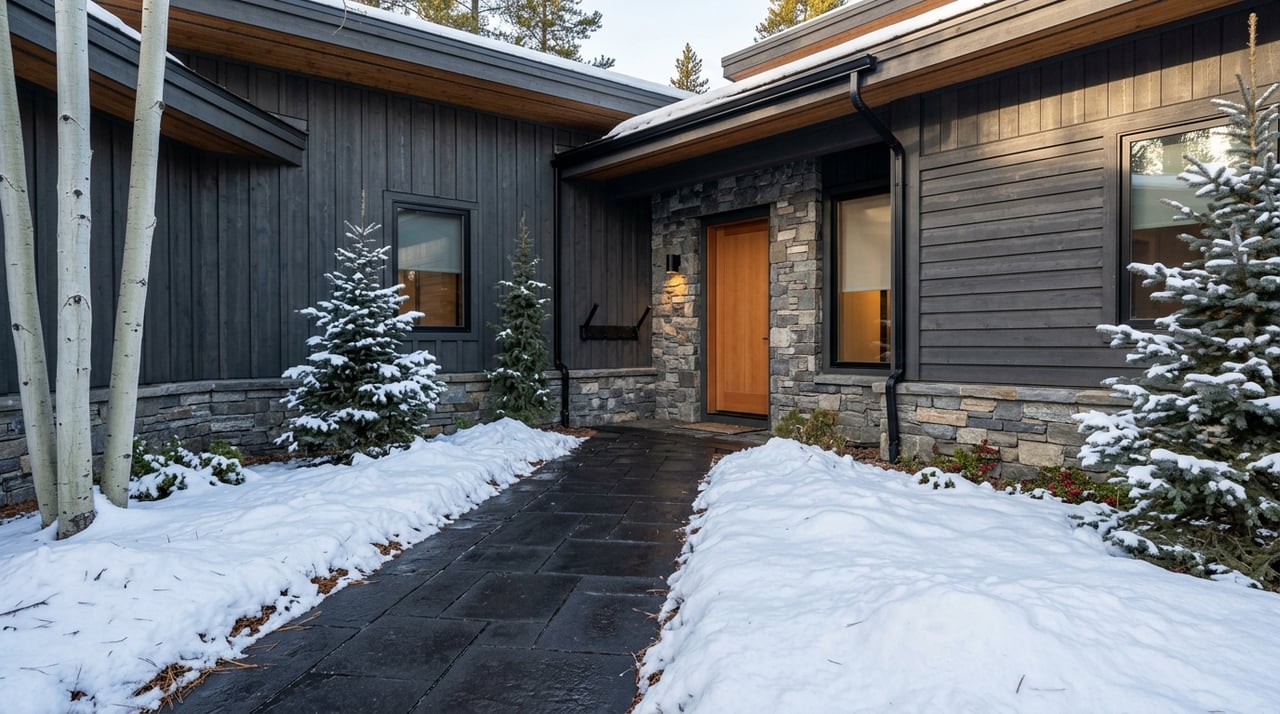
The setting is one of the biggest draws. Powder Ridge is tucked into the pines, which tends to appeal to buyers who want Mountain Village access without a base-area atmosphere outside the window.
Alpenglow condominiums are a short drive from Mountain Village, and the resort notes that a car is recommended even though shuttle service is available. That makes it a better fit for buyers who are comfortable trading some walkability for more separation and Lone Peak-oriented views.
If you like the idea of a calmer home base and do not mind planning around a shuttle or vehicle, Alpenglow can make sense. It is less about immediate plaza access and more about a quieter mountain setting.
The research report describes Lone Moose as a quiet forested escape at the base of Andesite and Flat Iron, with the Lone Moose lift just outside the door. That combination can be compelling if you want direct ski utility in a more removed setting.
Compared with the core village buildings, Lone Moose fits buyers who want lower noise and a stronger sense of retreat. It is less walkable to the village center, but that is often the point.
The easiest way to compare Mountain Village ski neighborhoods is to start with your top priority. Once you know what matters most, the field narrows quickly.
If you want to step outside and be close to lifts, dining, and après, start with:
These options place you closest to the village core and its services.
If you want ski access with less plaza noise, focus on:
This group often gives you a strong balance of lift access and breathing room.
If you care most about forest setting, bigger views, or a quieter home base, look first at:
These areas usually involve more driving, shuttle use, or less direct walkability, but they can feel much more private.
In Mountain Village, ownership details can matter just as much as ski access. Before you move forward on any property, it helps to ask a few practical questions.
Some core village properties function more like resort lodging, with front desks and hospitality services. That can be a major benefit for some owners, but you will want clarity on how operations, owner use, and shared costs are structured through the HOA and any resort program.
This is especially important in resort buildings. For example, Village Center HOA minutes show budget increases, reserve funding for furniture, fixtures, and equipment, plus discussion of remodel work, which is a good reminder to review meeting minutes and reserve planning carefully.
Do not assume two properties with similar asking prices carry the same ownership costs. HOA dues in Mountain Village may cover very different combinations of insurance, maintenance, snow removal, garbage, road work, parking-related items, or shuttle access.
In several of the quieter and view-oriented pockets, the answer is yes. Skycrest and Alpenglow explicitly mention shuttle service and recommend a vehicle, while areas like Powder Ridge and Lone Moose are more private and less centered on walk-everywhere access.
If you are touring properties in person or studying maps from afar, it helps to orient yourself by street names as well as neighborhood names. The current resort road map includes useful anchors such as Black Eagle Road, Beaverhead Drive, Turkey Leg Road, Heavy Runner Road, Rose Bud Loop, and Sitting Bull Road, which can make the village layout much easier to understand when you compare options.
In a market like Big Sky, the best choice usually is not the “best” neighborhood on paper. It is the one that matches how you want to ski, relax, host guests, and manage ownership over time. That kind of fit becomes much clearer when you compare access, activity level, building style, and HOA structure side by side.
If you want help sorting through Mountain Village options, local context makes a real difference. Ben Coleman can help you compare neighborhoods, ownership tradeoffs, and current opportunities with a clear, low-pressure approach tailored to how you actually want to use the property.
Stay up to date on the latest real estate trends.


Ben's knowledge of the Big Sky market and relationships built over time with the real estate community helps in every step of the process. Contact him today to discuss all your real estate needs!