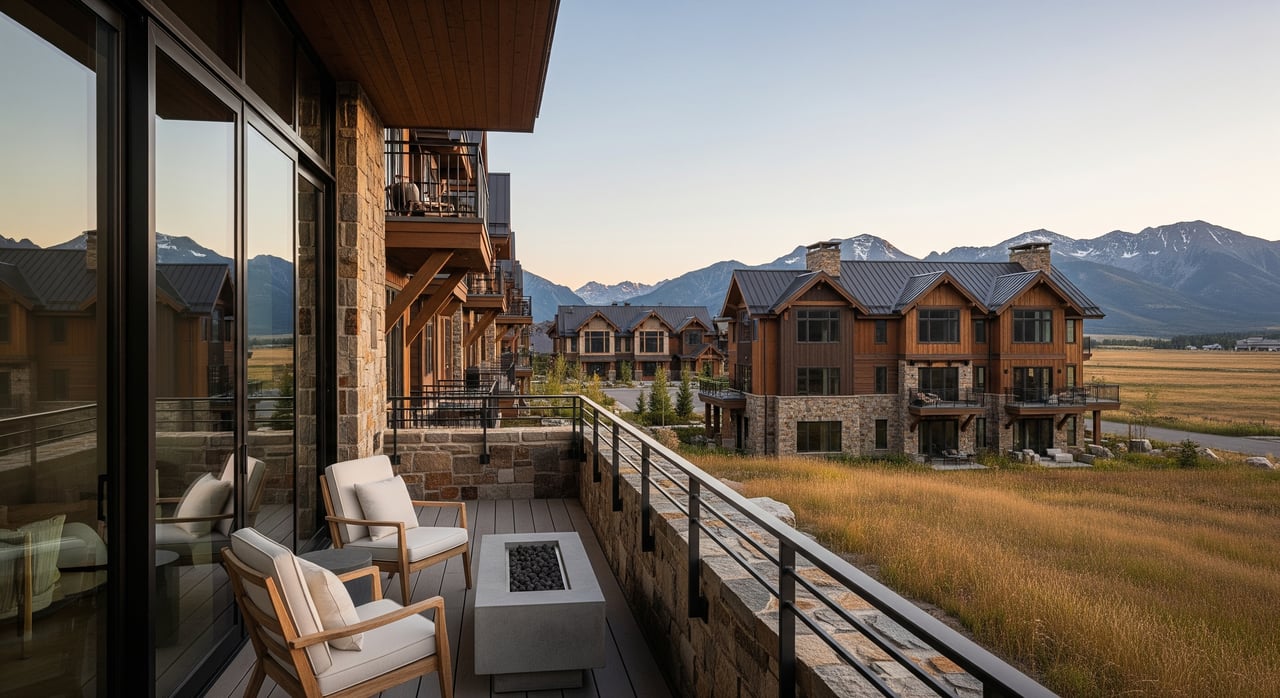
Big Sky Condo vs Townhome: How to Choose in Meadow Village
Trying to decide between a condo and a townhome in Big Sky’s Meadow Village? You are not alone. The right choice shapes your storage and parking, HOA fees, rental options, and winter maintenance routines. In this guide, you will learn how each option works in Big Sky, what to look for in HOA documents, how financing and insurance differ, and how to match the property type to your lifestyle and budget. Let’s dive in.
Not all “condos” and “townhomes” are the same in Big Sky. A condominium is a legal form of ownership created by a recorded declaration and plat. You own your unit interior and share ownership of common elements like land, roofs, hallways, and amenities through an association.
A townhome is a style of home with its own entrance and often a garage. Legally, a townhome can be set up as a condo or as fee-simple ownership of the lot and structure. That means the term “townhome” does not guarantee who handles roofs, walls, or driveways. Always review the recorded declaration and plat to confirm responsibilities and limited common elements like balconies or assigned garages.
Bottom line: ownership form, not the marketing label, determines maintenance, insurance, and financing.
Condo titles typically show the unit plus an undivided interest in common elements. Association assessments can become liens. Fee-simple townhomes usually convey the lot and structure, with HOA covenants still applying to shared areas.
In both cases, check the county recorded documents for exact boundaries and any limited common elements reserved for your unit. This is how you confirm who handles exterior components and what your rights include.
Lenders often treat fee-simple townhomes more like single-family homes, which can make conventional, FHA, or VA loans easier to place. Condominiums can face stricter underwriting standards. Some lenders require project approvals, owner-occupancy ratios, reserve levels, and clean litigation history.
If you plan to finance a condo, verify options early. A condo project that lacks certain approvals can narrow your loan choices and buyer pool when you resell.
Association master policies vary. Common types include “all-in” or “bare walls out” policies that may cover interior improvements, and “walls-in” approaches where owners are responsible for finishes and sometimes fixtures. For fee-simple townhomes, owners often carry a homeowners policy that covers the structure and personal property, while the HOA insures only shared elements.
Big Sky’s heavy snow and freeze-thaw cycles make insurance clarity essential. Confirm who insures the roof, how freeze or pipe events are handled, and what the master policy deductible is. A high deductible can shift more cost to owners after a claim.
HOA fees reflect what the association actually does. Higher fees often cover exterior maintenance, roofs and siding, landscaping, snow removal, common utilities, building insurance, shuttles, on-site staff, and reserves. Lower fees may mean you handle more, like private driveway snow or exterior painting.
Ask for the current budget, reserve study, and any notes on special assessments. A strong reserve reduces surprise costs for big items like roofs and siding. In Big Sky, confirm whether roof snow and ice-dam mitigation are handled by the HOA or by owners, and how shared roads and paths are plowed during storms.
In Meadow Village, many smaller-footprint units marketed as condos lean toward “lock-and-leave” convenience with HOA-handled exterior items. In Mountain Village, you will find more attached townhomes with garages and sometimes more owner responsibility for exteriors, which can trade convenience for privacy and storage. These are general patterns only. Verify each declaration and budget before you rely on the assumption.
If you have skis, bikes, and fishing gear, storage matters. Condos often provide smaller in-unit storage and may include shared ski lockers or exterior storage rooms. Townhomes are more likely to offer private garages, basements, or attic space.
Before you buy, confirm the exact storage included. If there is a locker, ask about size and rental rules. If there is a garage, confirm if it is deeded or assigned.
Parking setups vary. You might see deeded garages, assigned spaces, or first-come surface parking. Visitor parking rules can affect how you host friends or guests, especially during peak ski weeks.
In winter, access is everything. Ask about plow schedules, driveway clearing responsibilities, and any rules for on-street parking during storms. Clear access impacts livability and rental performance.
Condos typically have more shared walls and common corridors, which can mean more neighbor activity around you. Townhomes often have private entrances, fewer shared corridors, and a multi-level layout that feels closer to a single-family home.
If peace and separation matter, a townhome layout may fit better. If convenience and minimal upkeep matter most, a condo could be the better match.
Condos may include elevators or shared stairways. Townhomes often have direct ground-level entry, which can be helpful for gear loading and winter boots but may mean more stairs inside the unit. For part-time owners, the ease of walking away after a weekend can be a deciding factor.
Two layers govern short-term rental use: association rules and local taxes or permits. Associations can ban or restrict short-term rentals or set minimum stay requirements. Local authorities may require registration and lodging or sales tax collection.
If renting is important to your plan, confirm the HOA’s rental policy before you write an offer. If you will use a manager, clarify who handles license filings and tax remittance.
Big Sky is highly seasonal. Winter is peak demand, while shoulder seasons see lower rates and occupancy. Proximity to lifts or shuttle stops, on-site amenities like hot tubs and parking, unit layout, and rental-friendly rules all influence income.
Request actual rental history when available. Review seasonal nightly rates, occupancy, and net income after management and HOA fees. Compare to local comps and ask the HOA if aggregated rental histories exist.
Confirm utility costs, especially winter heating and snow-related expenses. Some associations limit common facility use for renters, which can affect guest appeal and reviews.
Expect higher utility and maintenance costs in winter, along with potential insurance premium differences for vacation rentals. Check any restrictions on amenities or guest counts that apply to renters.
Use these as directional guides only. Always confirm responsibilities and fees in the recorded documents and current budget.
Documents to request:
Key questions to ask:
Comparison points for Meadow Village and Mountain Village listings:
Choose a condo if:
Choose a townhome if:
If you are unsure, compare total annual costs, not just monthly fees. Add up HOA dues, insurance, utility estimates, and expected maintenance to see the full picture.
Every Big Sky building and subdivision is different. Matching your lifestyle to the right ownership form and HOA is where local knowledge pays off. With 24-plus years in Big Sky and a relationship-first approach, Ben will help you review the documents, clarify snow and roof responsibilities, and align your financing and insurance with the property’s setup.
Ready to find the right fit in Meadow Village? Reach out to Ben Coleman for a personal market consultation.
Stay up to date on the latest real estate trends.


Ben's knowledge of the Big Sky market and relationships built over time with the real estate community helps in every step of the process. Contact him today to discuss all your real estate needs!