Seeing “ski-in/ski-out” on a Big Sky listing can mean very different things depending on where the property sits in Mountain Village. If you are coming from out of state, it is not always obvious whether you can click in at the door or if you will be walking across parking areas in ski boots. This guide explains the terms you see in listings and how they translate to daily life, rental appeal, and pricing. You will also get a practical checklist to verify access before you make an offer. Let’s dive in.
What ski-in/ski-out means in Big Sky
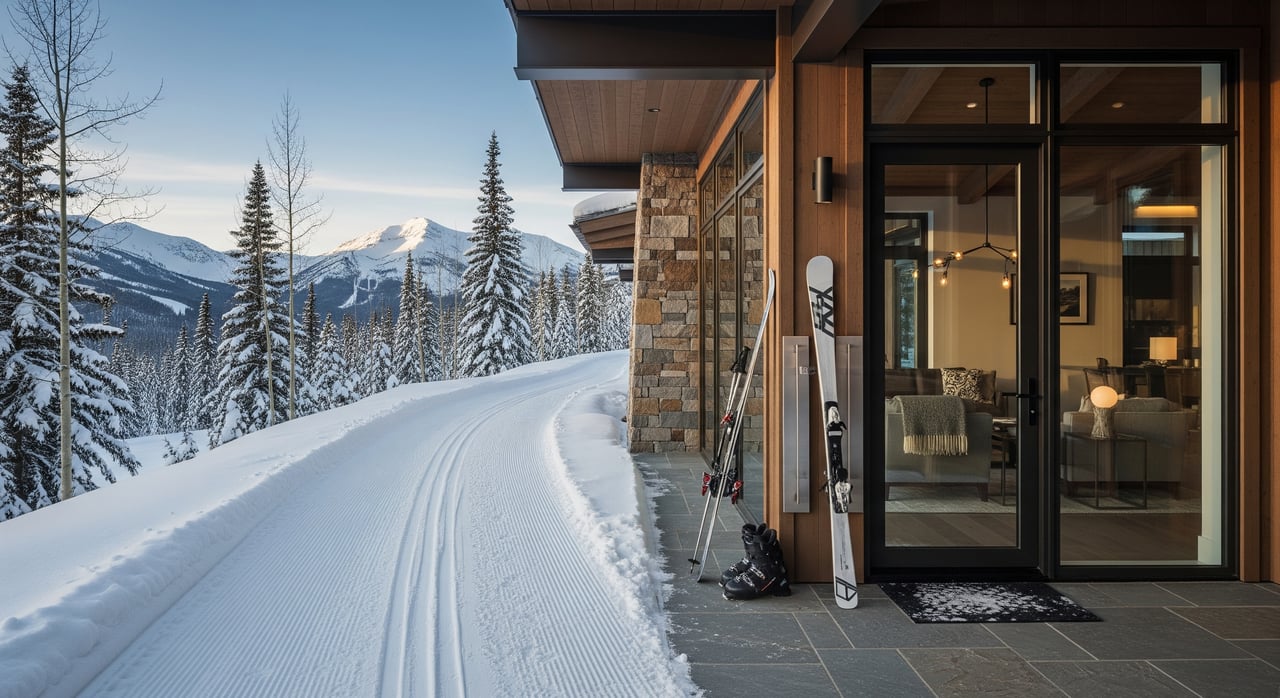
In Big Sky Mountain Village, true ski-in/ski-out means you can ski directly between your door or immediate property edge and maintained resort terrain, and you can return on skis without using a road, vehicle, or a long un-skiable walk. The connection is typically a groomed run, resort-maintained connector, or a dedicated trail that reaches the building entry or an on-site ski locker that opens to the snow. You should not need to cross public roads or trek across long, unplowed surfaces.
Objective criteria to confirm
- A groomed trail, connector, or ski run comes directly to the building entry or a short, practical doorway-to-trail transition.
- No public road crossings or long, icy walks are required to reach lifts or to return home.
- Access is deeded or resort-permitted, often documented by an easement or resort operations plan.
Why it matters: immediate convenience, gear on and gear off at the door, stronger rental draw in winter, and a typical pricing premium due to scarcity and guest demand.
What “walk-to-lift” really means
“Walk-to-lift” is a convenient phrase, but it is less exact. It indicates a comfortable walking distance to the base area or a lift, often along sidewalks, village pathways, or parking areas. The walk may include stairs or slight slopes, and surfaces can be cleared but sometimes icy in midwinter.
What to expect in Mountain Village
- Walk times often range from a few hundred feet to several tenths of a mile.
- Time-to-lift is commonly 2 to 15 minutes on foot depending on grade, weather, and the gear you are carrying.
- It is not the same as clipping in at your threshold, but it can offer value if you want proximity without paying the ski-in/ski-out premium.
What “shuttle-access” implies
Shuttle-access properties rely on a resort, village, HOA, or private shuttle to reach lifts and trails. Walking in ski gear is usually not practical from the door. In Mountain Village, seasonal circulator shuttles and HOA-run services are common, and some owners use private cars or ride services during peaks or off-hours.
Tradeoffs to weigh
- Lower purchase prices are common compared with true ski-in/ski-out units.
- You depend on schedules, weather, and crowding, which can add wait time.
- Early or late skiing requires planning around shuttle hours.
How Mountain Village layout shapes access
Big Sky’s Mountain Village is a spread-out base area with hotels, condo buildings, and pockets of homes. Some buildings sit beside a groomed connector that brings you to the base. Others are uphill, across village streets, or separated by parking areas. Maintenance routines also matter. Sidewalk plowing, snowmaking near the base, pedestrian bridges, and covered walkways can make a “walk-to-lift” location more practical in winter boots. Lift schedules and grooming plans can influence whether you can return home on skis at different times of day or at the shoulders of the season.
Verify the listing language before you buy
The words in a listing do not guarantee the experience at your door. Use this checklist to confirm what your day-to-day access will look like.
If the listing says “ski-in/ski-out”
- Ask for precise start and end points relative to the unit door or building entry. Request photos, a trail map overlay, or a short video.
- Confirm whether the return trail reaches the door or a building entry or ski locker, and whether the entry is practical in ski boots.
- Identify who maintains the connector, resort or HOA, and whether grooming is consistent during the season.
- Review title and HOA documents for recorded easements and any rules that affect the route.
If the listing says “walk-to-lift”
- Request measured distance and time. Ask for the exact walking route mapped on a trail or village map.
- Clarify surfaces and elevation change, stairs, paved paths, or cleared sidewalks.
- Confirm winter maintenance of sidewalks and whether the route is realistic with ski boots and gear.
If the listing says “shuttle-access”
- Get the shuttle schedule, seasonal dates, and nearest stop to the unit.
- Ask whether the shuttle is resort, HOA, or privately run, and whether it is free or paid.
- Check early and late operating hours during peak weeks, and confirm alternatives during off-hours.
Title, HOA, and resort items to review
- Deeded easements or rights-of-way that secure ski access.
- HOA covenants that address short-term rentals, guest parking, ski storage, and exterior access points.
- Resort management rules that may affect guest routes or passes.
Field verification you can request remotely
- A current trail map with the property pinned and the route marked.
- Winter photos or video of the last 50 to 100 feet to the entrance.
- Satellite or street-level winter imagery when available.
- Written confirmation from the HOA or property manager about maintenance responsibilities and shuttle details.
Tip to remember: “Ski-in/ski-out as used in a listing should be confirmed with the seller, HOA, or resort. Ask for winter photos or video, a trail map overlay, and documentation of who maintains the connector.”
Pricing, lifestyle, rental, and resale
Prices in Mountain Village reflect access. Properties marketed as true ski-in/ski-out usually command a premium compared with similar units that are walk-to-lift or shuttle-reliant. The size of the premium varies with micro-location, building quality, and rental potential.
- Convenience: Ski-in/ski-out cuts transition time, which is valuable for frequent skiers and larger groups carrying more gear.
- Noise and traffic: Base-adjacent units can experience more activity, deliveries, and peak-period energy.
- Privacy and views: Homes a bit removed may trade direct access for quieter settings and broader outlooks.
- Year-round use: Proximity to lifts also influences summer access for mountain biking and hiking.
If you care about rental income, remember that winter is the primary driver. Nightly rates and occupancy often spike in peak ski weeks, while summer can add useful but typically lower-yield shoulder demand. Short-term rental policies are set by each HOA or complex, and some associations restrict or cap nightly rentals, which can materially change revenue assumptions.
Ongoing costs can differ as well. Ski-in/ski-out buildings may carry higher dues if the HOA maintains connectors, shared ski rooms, snow removal, or shuttle services. Always confirm who clears walkways and exterior stairs, HOA, resort, or owners.
Safety, operations, and legal checks
- Lift hours: If you rely on a specific lift to ski back, verify last-run times and whether a safe evening route exists. Some connectors are unlit after hours.
- Terrain exposure: Most Mountain Village base areas are low avalanche risk, but if a property sits near terrain that leads toward backcountry, evaluate exposure and heed resort boundary signage.
- Title certainty: A touted ski route could be permissive and subject to change. Confirm recorded easements and agreements in title and HOA documents.
- Insurance: Properties beside runouts or resort operations may have unique insurance considerations. Review HOA policies and consult your insurer.
Remote buyer game plan
You can verify most access details from afar with a clear process and local contacts.
- Ask the listing agent for winter photos or a short video that shows the exact door-to-trail path and the return route.
- Request a recent resort trail map with the property pinned and the walk or ski route marked.
- Contact the HOA or property manager for covenants, rental rules, and maintenance responsibilities.
- Confirm shuttle routes and schedules for the season you plan to use the property.
- Use a title company to verify easements and exceptions. County records in Gallatin and Madison can also help confirm rights-of-way.
- For planning, note that the drive from Bozeman Yellowstone International Airport to Big Sky is typically about an hour in good conditions. Always check seasonal travel times.
Local sources to consult include Big Sky Resort for trail maps, grooming plans, and lift hours, the property’s HOA or manager for maintenance and shuttles, county property records or your title company for easements, local real estate agents with Mountain Village experience for comparable sales and typical access premiums, and local short-term rental managers for realistic rate and occupancy assumptions.
Which access type fits your goals
- Choose true ski-in/ski-out if putting skis on at the door defines your lifestyle and you value rental strength in peak winter.
- Choose walk-to-lift if you want access without the top-tier premium and you are comfortable with a short daily walk in boots.
- Choose shuttle-access if budget, privacy, or space matters more than direct access, and you are fine planning around a schedule.
If you want help interpreting a specific listing, a local walk test in winter, or guidance on HOA and title documents, reach out. You will get clear, low-pressure advice shaped by long-term Mountain Village experience.
Ready to explore the right access fit and see what is on the market today? Contact Ben Coleman for a personal consultation and local verification of any property’s ski access.
FAQs
What does true ski-in/ski-out mean in Big Sky?
- It means direct, skiable access between your door or property edge and maintained resort terrain, with a skiable return, no car, road crossing, or long un-skiable walk required.
How long is a typical walk-to-lift in Mountain Village?
- Walks commonly range from 2 to 15 minutes depending on distance, slope, weather, and gear. Always ask for a measured route and winter maintenance details.
Are Mountain Village shuttles reliable for daily skiing?
- Resort and community shuttles operate seasonally, but routes and hours vary with demand and time of year. Confirm the schedule and stop location for your specific property.
Do ski-in/ski-out properties rent better in winter?
- Generally yes, they attract strong winter demand due to convenience. Actual income depends on HOA rental rules, property quality, management, and seasonality.
What documents should I review to confirm ski access?
- Request recorded easements in the deed, HOA covenants about exterior access and rentals, written confirmation of who maintains connectors, and winter photos or videos of the route.